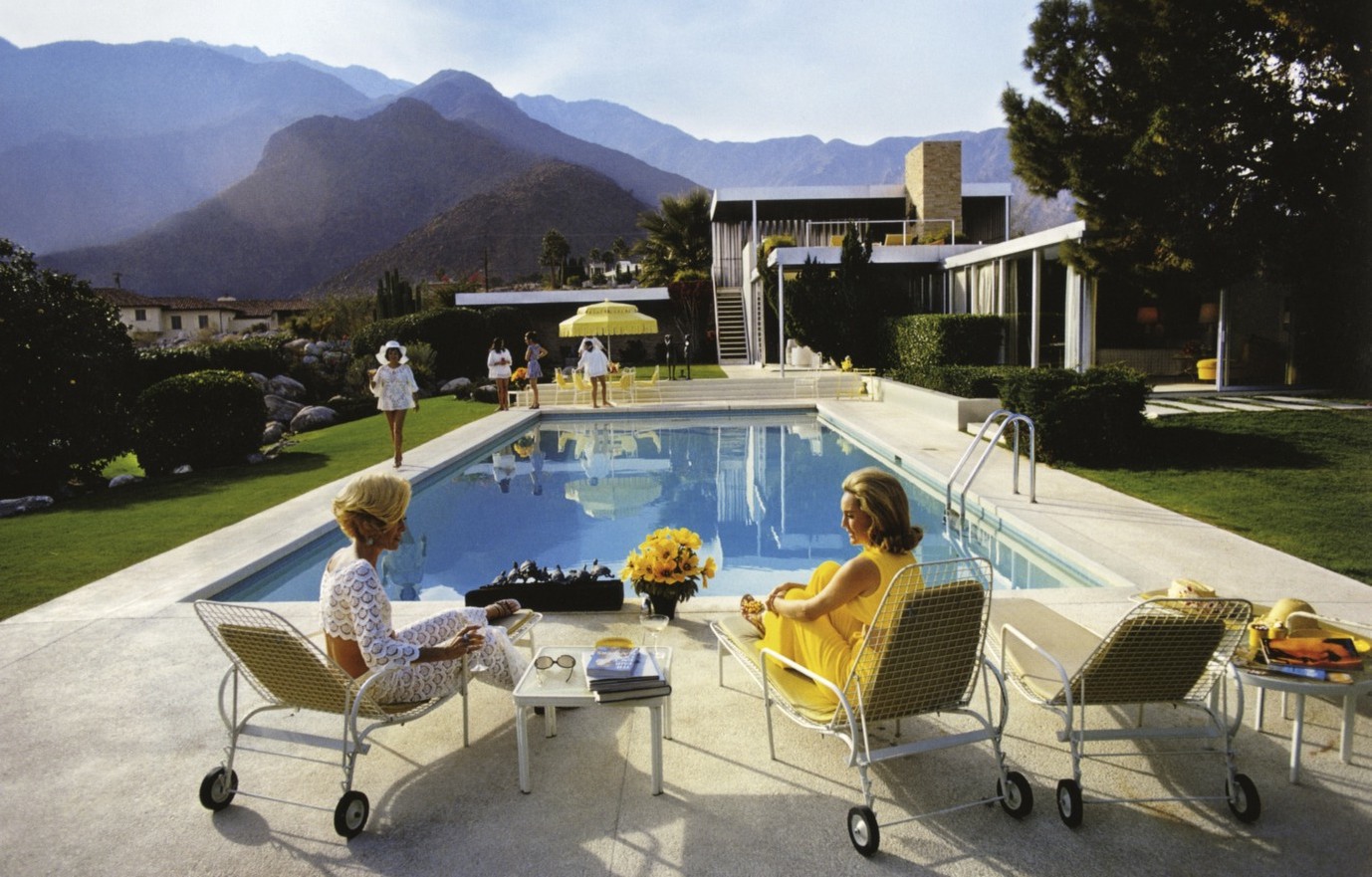
Monday, May 28, 2012

Memorial Day: Thank You, Those Who Serve

Thoughts for a Holiday That Should be about More than "What's on the Grill?"


From the photographer Ken Rockwell come these thoughtful remarks, pasted here from his helpful camera blog.  (He has his detractors, certainly, but in my experience his reviews are always spot on.)


Here's Mr. Rockwell:

Today is a day everyone gives thanks for those who gave everything in the past, so that the rest of us can enjoy our freedom today.

I give thanks each and every day, because if it wasn't for these brave folks who put duty before self, I wouldn't be able to enjoy just sitting here and having a nice day. Without these sacrifices, we wouldn't have much of anything except total chaos.

Today we have an all-volunteer military, and at least one American is killed every single day in the Middle East. I hope everyone realizes that these folks could have wimped out and stayed home, but instead chose to to risk everything to serve all of us, instead of themselves.

I give thanks everyday for everyone out risking their lives in the military, as well as police, fire and every other kind of public safety operation. There are no more honorable professions than these, where people risk everything they have every day so that total strangers — that's us — can live in peace. If you folks weren't out there every day, we'd still have total chaos!

THANK YOU!

Tuesday, May 22, 2012

Money for Nothing (and Our Kicks for Free)

AVC Scholarship Awards, 2012

Anybody remember Dire Straits?  That old classic song "Money for Nothing" has workers who install kitchen appliances seeing a rock band on MTV, and complaining that the musicians get "their money for nothun and their chicks for free."  (Being a rock star is so easy that the worst that might happen is that you "get a blister on your little finger.")

Money for nothing?  Well, not exactly.  We just celebrated the real-life version of that, at the recent Scholarships Award Ceremony last week.  Maybe here we would say, "Money for rising above it all and really achieving true success."  It always makes me a bit happier, a bit more confident about the ultimate justice in the world, when I see the awards being given and the family support behind the winning students.  From Board Members to Scholars in Residence to future AVC students, here are some photos from that exciting day.


Congratulations, everybody!

Thursday, May 17, 2012

The Eagle is Tired of Holding Up the World

Sunday's Upcoming Eclipse

According to the Chumash, one explanation for an eclipse is that the eagle which holds up the world gets stiff, and so he stretches his wings for a moment, just to rest.  Doing so blocks the sun.

That will be happening on Sunday afternoon, but the view will be better "down below," as folks in the Antelope Valley refer to the infernal and demonic regions of Los Angeles.  Apparently the hierarchy must be like this: Heaven, Bishop, Lancaster and Palmdale, Los Angeles, Hell.  Going over the mountains down into the LA Basin means venturing ever closer and closer to Hades itself --- one goes "down below."

Taking that risk, though, may be worth it on Sunday night, especially if there's no marine layer predicted.  The partial solar eclipse would be observed best from the Griffith Planetarium.  If it is clear in the west, here's the expected progression, as taken from Page 21 of the May 2012 issue of their members' magazine, The Griffith Observer


A super bold-faced note of warning here.  It's not a wives' tale.  YOU MUST NOT LOOK AT THE SUN.  It really will fry your jellybeans.  And simple welder's goggles may not be good enough either.  Here is what the Griffith Observatory staff remind us: "The only safe way to view the eclipse directly is through a solar filter, which not only dims the sun in visible light by a factor of 100,000, but also blocks invisible ultraviolet and infrared radiation."

I keep mine around all the time, to use from year to year.  Here's my household pair, with what is now probably dated graphics.


For those who would like to blow off finals --- faculty included --- this eclipse path will include China, the Grand Canyon, and Zion National Park.

Easier is just to go to the Griffith Observatory, in the Los Feliz area of Hollywood.  They have both text about what an eclipse is as well as information on their public events on their website.  Here is the page link:

http://www.griffithobservatory.org/exhibits/special/Specail_Event_Partial_Eclipse_2012.html

Parking will be tricky, so plan on wearing your sneakers and having to walk up the hill from parking areas nearer to the Greek Theater. 

I once saw a total eclipse of the sun, in Costa Rica.  That's worth a special blog post itself, but for now, just two reminders: wear sneakers because Griffith Park parking will be an issue, and never ever look at the sun directly, even during a nearly-complete eclipse.

Sunday, May 13, 2012

Former AVC Student Reunites with Adopted Daughter

Celebrating Mother's Day . . . 18 Years After Giving Birth


This blog normally uses certified organic, home-grown, campus-generated content, and as such, puts up very few posts that merely re-tweet the work of others.  Yet former AVC student Tre Miller has written such a powerful and life-affirming post, it deserves a special spotlight.  Having gotten pregnant in high school, Tre made a very hard, brave choice: she carried the baby to term and put the child up for adoption.  She stayed in touch with the parents but didn't meddle in that family.  In time, her daughter found her, and they have had an emotional and very successful reunion.

Tre's story about her decision, about her daughter, and about their newfound love can be found on this link.

http://www.thedailybeast.com/women-in-the-world.html

There may be other stories in and around it; the one that's about a former AVC student is titled "A Daughter, Rediscovered."  God bless mom and kid, both.

Wednesday, May 2, 2012

Now You Can Buy Beyonce's Lip Gloss at the Getty

more thoughts on celebrities, art, and the impossible ideal

From real Queens to beauty queens, in one easy step.  But then beauty is "L.A.'s Style" --- just ask the Getty.  Here's what greets you when you disembark from the tram these days.


Hmm, whatever happened to Vermeer and Botticelli?  We are so used to long legs and $20,000 dresses I don't think many people stop and say, hey, where am I, an art museum or a newsstand?

After all, the cult of personality is so strong in our society there is no place one can escape it.  True story: you can buy this week's People magazine while in line at Lowe's.  Now whether or not the stars selected to illustrate "stunning stars" are stunning or not is one problem, but another is, weren't they just as stunning last week and the week before?  Where's the relevance of all of this?


Maybe the thrill is not in the discovery, but the search.  Are we all just peeping toms, ready to look inside somebody's bedroom as soon as the curtains are accidentally left open?  People and other magazines imply that they can get us behind closed doors, telling us what the stars are "really" like, or what off the shelf products work for them.  Shop with the stars!  Sorry, but all the lip gloss in the world won't make me or my dog look like Beyonce.  That's genetics and airbrushing.  Yet how dearly we love to look and look.


A "show" (pun intended) explicitly looking at voyeurism ran recently in San Francisco and at the Tate Modern in London.  It includes photos taken at night of people having sexual relations in parks.  Is it art or just bad manners?  At least those people were real.  Most shots of movie stars are altered extensively, as we know and yet kind of forget.  In the Getty show, there's a marked-up test print of Brittany Spears, showing what airbrushing still needs to be done in post-production.  That is a rare pulling-aside of Mr. Oz's curtains.  We know intuitively that for every good picture of a celebrity there must have been a bad one (maybe two or three bad ones), but that side of the editing process too rarely receives discussion.  There's a term "contact sheet" that means a set of negatives were printed "as is" (just straight and direct 1:1 from the negative to the paper), to make preliminary choices for what to enlarge.  Here is a contact sheet.  Quick, you get three guesses, who's this?


Hint: she was last seen clinging to the edge of a swimming pool two blog posts back.  As a related comment, I recently saw the movie A Week With Marilyn, about the young boy who apparently fell in love with the real MM while she was making a movie with Lawrence Olivier in England.  It seemed convincing enough until I then re-watched Some Like it Hot last night.  Ohhh boy.  There ain't no MM but the real MM.  Pepsi Zero just isn't the same.

Which brings us back to the Getty.  It was a lovely day.  I admit that I had been up late the night before doing an art project, so last Saturday when I went down with Santi Tafarella to meet the AVC students, I was not my best.  People magazine had asked Beyonce, "if you look tired, what's your go-to beauty trick?"  She answered: "Lip gloss --- I love L'Oreal's Infallible 8 HR Le Gloss in Coral Sands."  Okay, good to know, but whatever happened to just looking tired when you look tired?  What's the crime in being human?  And maybe it is, as they say, a teachable moment --- the student says to me, Hood, you look like shit, and I say, thanks, I was up all night.  And the student says, okay, why.

And that's the chance for me to model the writer's life, and talk about the revision process of my books, or the new painting series I am excited about, which in turn will give my hypothetical student the opening to share with me what she or he is jazzed up about on that side of the fence.  Let's just talk to one another person to person, sans lip gloss and pretense.  Less lip gloss, more naps.

O now, that's heresy, that is.  After all, one of the most respected cultural institutions in Los Angeles is the white palace on the hill.  Don't try to go there during the holidays: it's where the upper middle class takes their out of town relatives for some authorized "culture."  You won't get a parking place.  And what does the Getty think about lip gloss?

They are all for it, apparently.  Here's an image from the postcard sold to support the current Herb Ritts photography show.


Kelp in Long Beach is on display here, along with some hunky props.  L.A. Style?  Is this who we all are when we run the private video tapes in our heads?  (Who we are or who we want to sleep with --- an extension of the same metaphor.)  The exhibit talks about Ritts's technical skills, which I admire greatly, and his artistic vision, which makes me less convinced. After all, just upstairs is James Ensor's Christ's Entry into Brussels or Vincent van Gogh's Irises, so to my mind, those sorts of things set the value for "vision" pretty darn high.

What we have here, rather than vision, may be something closer to an expression of the male ideal, albeit one with a sort of Euro-metrosexual-homoerotic flair.  The men of Athens would have known what to say about these three young men (something in Greek along the lines of, yabba dabba do), but is there much here that we don't see every day in ads for cologne or Calvin Klein undies or even on the cover of Men's Fitness magazine?

Another Ritts shot (and I am doing my best to avoid pens about Ritz Crackers or puttin' on the Ritz) is Fred, the world's sexiest tire man.
In fact, do I misremember, or isn't this shot on display in the waiting room at Affordable Tires in Palmdale?  Lighting, sets, props, the pose, the slicked-up model himself: I have no complaints.  But really, as we used to say in the hamburger ads, where's the beef?  Any chance here for commentary?  I guess I am thinking that we have a chance here to do an algebra equation.  Beauty + x, and in that math, to let "x" be a word like "horror" or "insight" or "spirituality" or even "social critique."  This show leaves us the same walking out as when we walked in, other than we maybe feel even worse about our own imperfect, schlubby bodies than we usually do.

Certainly the Getty can't be saying that the essence of L.A. Style is empty repetition of visual cliches?  (That would be more like MOMA in New York to say that.)  In some ways, the Getty seems to be victim of the same cult of celebrity it wants to critique by using a negatively-charged word, "cult."  (One of the shows at the Getty now is titled "The Cult of Celebrity.")  This is an odd word choice, isn't it?  Nobody wants to join a cult: cults are where underage girls are forced to marry their 80-year-old uncles in a compound in Utah; cults are the places where in the jungle everybody drinks the Kool-Aid and dies.


Yet here he is, the late Mr. Ritts himself, fifteen feet tall and looking cool in his shades and brim.  Welcome indeed to the cult of celebrity, with the Getty as head priest.  Look at this Ritts wall.  He's the size of Michelangelo's David and nearly as handsome.  If he were ugly or only took pictures of janitors, would he still merit a wall to himself at the entrance to the exhibition?  In fifty or a hundred years, will art museums still present his work with awe and reverence?  Not that he isn't very very good at what he does, but so are (were) Helmut Newton or Richard Avedon or a dozen others.

I could just miss the extra touch of genius that makes these a notch better.  After all, one astute critic, Barbara Isenberg in the blog "LA Observed," says that "perhaps more important, the exhibition demonstrates a very creative mind at work, maximizing his models, light and settings"  She likes his "oiled bodies, strangely turned limbs, unexpected celebrity poses, and even a model crowned by a dead octopus."  Sure, I guess.  I just look at Madonna in the '80s and admire her hard work and her ability to reinvent herself (repackage, one might better say), and yet don't get much from the shot itself.  

Andy Warhol is the one who said in the future, everybody will be famous for fifteen minutes.  The Getty loves Warhold, too.  Here we are back at the tram's arrival station.  The banner's font looks hand written, as if this is an autographed poster by AW himself.


Well sure.  And besides, he must be a movie star --- he's wearing sunglasses indoors.

Not that it's fair to go after Andy Warhol, whose delight in self-parody is infectiously good-natured.  He knew it was all an act, and his silver wig only made that self-awareness public.  Here's his own self-portrait in the chemical blurriness of a Polaroid, as also sold on a postcard in the Getty gift shop.


He must have loved the accident of ink that left an unexposed fan of chemicals quoting his hair on the top right of the shot.  Thank you, Jesus --- an hour in the darkroom couldn't have gotten such a lovely visual echo.

The Getty show is one which works better as advertising than as experience.  Look at this poster outside the exhibition building.


The cool, clean grid of the modern (nearly postmodern) glass windows plays nicely against the limestone cladding, visual lines that unify the entire Getty campus.  And our LA Style model with the legs to die for seems like exactly the sort of larger-than-life goddess who should live in this suburb of Mt. Olympus.  Even the black and white of the poster itself matches well the light and dark mosaic tones of the architecture.

Yet in seeing the show, AVC instructor Santi Tafarella spoke to me of feeling there was a lot of fakery going on.  Richard Gere is gorgeous in his photographs, but as a faux mechanic, in his 1980s poses he makes visual claim to a blue collar authenticity which is unearned, visually.  Why is the Getty going along with this?  Don't they have better ways to fill the halls?  Maybe it's not art they are after, but social buy-in.  One of the docents we spoke to (who liked the show) noticed that it was popular with younger people, which may have been just the point.  The Getty may not be saying the slick, celebrity-centered photography is art, but it IS pretty, and if that prettiness gets folks in the doors, then okay, that's a good goal in itself.  Or perhaps the Getty wishes to build better partnerships with some of the entertainment industry's elite, for any number of valid reasons.  The late Liz Taylor owned, what, four van Gogh paintings?  Three more than the Getty?  Wouldn't they have loved to borrow them.  They could need cordial relations with Hollywood for any number of reasons, and a show like this might buy the Getty some love with the moguls and talent agents.

There's another factor too.  One reason shows happen is that it fulfills a condition of a donation.  That makes sense; museum x wants to enhance its permanent collection (deepen it or fill a gap), so needs work by artist y.  Donor z (who may be the same as artist y) says yes, I will give you a pile of stuff as a donation, stuff you really really want, but you have to promise to give it a full on exhibition.  In trade, the museum agrees, even if it wasn't their first choice for topics.  That happens often enough and is normal practice in the art world.

Human nature being what it is, maybe there's an even simpler explanation.  Santi was joking that the other curators didn't want the Ritts show in the first place, but humored one particular staff member out of kindness or self-interest.  The same thing might happen in Language Arts, if I wanted to do an eccentric revision of a creative writing course.  My long-suffering colleagues might be skeptical, but lacking a clear, logical reason to say no, might reluctantly go along ---- "Oh that Hood, you know what a nut case he is.  Give him this little pet project this once and maybe he'll shut up."

A short walk away from Herb Ritts and company is the Getty bookstore, and there I bought a book by somebody new to me, the Depression-era photographer Jack Delano.  Now try this on for size:


These are migrant workers at the end of the Depression, heading off to pick crops in a (supposedly) better state.  Will it really be any better for them there?  Probably not.  As an image, it basically is a shorthand visual version of Steinbeck's book and movie, The Grapes of Wrath.  Here is another picture from the same book.


He may not be as pretty as Fred with the tires, our miner here, but he's authentic, he's real, he's living history.  The belt either served him in less lean times (the holes all the way out to the end have been used at one time) or else, more likely, it's on its second or third owner, as he pulls it in to keep his pants tugged up tight against his hungry stomach.  This photograph reminds us of the real Hunger Games, the times not so long ago when for most Americans, owning a belt was an important thing, and a good belt, made from full-grain leather, was made to last.  You didn't throw it away: if you didn't need it, somebody else would find a use for it.

Should I ask, how many belts does Richard Gere have?  How many pairs of shoes does Beyonce own?  I mean neither any disrespect: both are powerful artists and for all I know, kind and loving human beings.  I make no assumptions that because they're wealthy and powerful they are in any way jerks or bitches, not them or any movie star.  I just think that I have more to learn, as a person, by spending time with some of Jack Delano's portraits than with Herb Ritts's work. 

Of course I will reveal my bias here and say that for me, the best celebrity worth knowing was my own dad.  He worked like a dog all his life, the poor guy, carrying 60 pound bags of wet laundry down narrow stairwells behind restaurants like the Brown Derby even into his sixties.  The movie stars ate lunch out front and my dad, as a delivery driver, made sure they had that day's supply of clean napkins, rain or shine.


He had served in World War II and made his belts last by punching a new hole in them with a saddler's awl, a trick I still use today.  In his younger days, he looked like Gary Cooper.  And when he came home, dead beat from work, did he look tired?  Sure, of course.  But he still read me stories or played Chinese checkers.  Maybe I should have offered him some L'Oreal Infallible 8 HR Le Gloss in Coral Sands.  Or at least a nice cup of coffee --- he was a fiend for coffee --- but I was just a dumb, selfish kid, probably didn't do much except try my darn hardest to winner at checkers.

A day at the Getty is never a day wasted, but part of me wishes the current shows looked not at celebrities but at, say, delivery truck drivers, or even just the Getty staff themselves, maybe each one holding up her or his favorite pet, from goldfish to pot-bellied pigs.  I must be in the minority; these galleries were full during our Saturday visit, and the gift shop well stocked with the exhibition catalog.  Sorry, Herb Ritts, I guess I am such a grouch I don't understand the attraction of naked men holding tires.  Would I like it better if they held books?  Maybe. 

Some books, paintings, symphonies take time to grow on one.  It will be interesting to go back in a week or two, give this work a second try.  (In the meantime, maybe somebody from the Getty will have emailed me, told me what the heck the big deal is.)

The Brown Derby is gone now, my father too, and it may be that future generations will be really glad that --- as with Delano's migrant workers --- Ritts took the time to show us Madonna in her best and youngest years.  She may even be alive then, can make an appearance on her hundredth birthday.  We are the same age, Madonna and I, only she works out ten times more than I do, so is a lot more likely to see that day than I am.  She will be rich, famous, and in her 100s . . . perhaps it is true, what they used to tell us back then, that "you can never be too rich or too thin."  Maybe in a few more years AARP can get Madonna to be one of their spokespersons.

Until then I plan to stick with Jack Delano and the sorts of people who tie gunny sacks to cars with jute rope.  They may not be beautiful, but then, neither am I, so in their company, even via the long distance phone call of a book plate, I somehow feel like I have found my tribe.

Monday, April 23, 2012

Amy Winehouse Paints the Queen

Celebrity Portraits, Part 1

The greater Los Angeles area hosts a number of world-class museums, and in preparation for AVC field trips to the Getty, whose current exhibitions examine the cult of celebrity, the AVC blog will look at some of the tensions inherent in our worship of famous people.  The Getty itself will be up for analysis in a week, but before then, let's talk about somebody who has the most widely circulated face in the world, namely, Britain's current ruling monarch, Queen Elizabeth II.

She is on postage stamps, money, Embassy walls, beach towels, tea pots, and even condoms.  Movies feature her, including the very gripping drama The Queen, and she sits for many state portraits every year.  What makes a portrait "work," and how much should we expect a celebrity portrait to reveal about the sitter's character?

Take for example the late great Lady Di.


Although she's no longer as famous as she once was, this 1991 picture by Snowdon still resonates with many viewers.  She looks up at the heavens (always a good trick to stretch out the neck, making it look younger, and to give the jawline clean angles), communicating with some kind of higher spirit, a spirit which happens to be bathing her in a very flattering light.  We don't know who she's looking at, but it probably isn't Prince Charles.  The tousled hair and oxford shirt don't look butch and instead add to her charm --- she is so good looking, she even looks good dressed as a man.  Is this who she "really" is?  It's a very flattering portrait, and perhaps that was who she "was" --- somebody hungry for fame and somebody whom camera lenses loved to fall in love with.

These sorts of issues will be part of a blockbuster summer show in London soon.  As the 2012 Olympics come to London, all of the museums are bringing out their highest profile shows.  The British Museum, for example, has cornered the market on Shakespeare, while the National Portrait Gallery has a sure-bet crowd pleaser with their overview of "The Queen in Art and Image."


This cover of the exhibit catalog shows her in all of her bejeweled magnificence.  It's worth a trip to London just to see the crown jewels on display in the Tower of London.  We're so used to movie props that it's hard to adjust to seeing bling on this scale --- all of it real.  The portrait here, on the book cover, happens to be the same as one used on stamps and other iconic distribution methods.  Even Michael Jackson hasn't had as much press (good or bad) as the Queen.  But as portraits go, is this a good one?  True, it's based on a photograph, tinted to look like an older style of photography, so in not just pose but visual culture, it's a very traditional piece of work.  Perhaps though this is who she is --- traditional, wise, calm, stable.  No funny stuff for her, thank you.  No abstract expressionism or Andy Warhol.  What makes a celebrity portrait noteworthy?

Maybe a how-to guide would help.  Here's one from the same year this portrait was made.


Don't you love the salacious cover?  What appears to be a totally nude woman --- and inside, we learn she wears only her earrings and a wristwatch, which makes it seem all the more tawdry --- is covered with the paper-clipped note.  She looks demurely into the far distance, not confronting the reader the way that bold Olympia does in Manet's famous portrait.  Of course, I don't think we can get the Queen to sit for a classical nude portrait, with or without her earrings.

Some sitters are eager to disrobe though.  Performance artist Leigh Bowery (1961-1994) was one of Lucien Freud's best nude subjects.  Freud (the grandson of Sigmund) we will get to in just a moment, along with the troubling question of what color flesh really is.  First we should figure out which is more useful, photography or painting, when trying to capture a sitter's essence.  Probably the most famous photographer of famous people right now is Annie Leibovitz, best known for her covers for Rolling Stone magazine, including this startling icon.


She too had worked with Bowery, a performance artist and fashion designer who later died of AIDS.  Here he is on set, prior to a shoot, dressed in one of the latex fetish outfits that was part of his act.


It's a great picture, dark and mysterious, one that turns viewers into voyeurs peeking through the curtains into some strange world of illicit sex.  Yet compare that to Freud's treatment of the same (and at that time, very notorious) subject.

First, here is a photograph of Freud in his London studio, working on a portrait.


As a side note, Freud, who died last summer in the same week as Amy Winehouse, never cleaned his studio, so that the walls and floor were covered with dried paint.  His friend and co-art world star, Francis Bacon, had the same practice, only Bacon's studio had even more rubbish on the floor.  Let's look at a Freud painting of Bowery, not the one in progress here, but one from the same period.


In doing the scan, I have cropped out the penis, but Freud is very much a "warts and all" artist, and never edited out the body for delicacy.  He might crop a subject for artistic reasons, but if so, the genitals usually stayed in.  In any case, isn't it interesting how directly the sitter looks out at us so directly?  He is by conventional standards not a perfect model --- he won't make the cover of Mens Fitness magazine, not unless it's part of a "before and after" sequence.  What this blog can't show is, first, size --- these are huge canvases, life size or larger often --- nor, second, the toothpaste-thick layers of paint, layers that are crusted up like scabs or a bad application of Bondo on a repaired car fender.  Blues, greens, reds, blacks: for Freud, there is no one color that is "flesh," and he builds entire landscapes of color and texture out of the human body.

What would happen if a "warts and all" artist like Freud were to paint the Queen?  For many years this was sort of an insiders' art world joke, along the lines of the Pope at a gay bar or something.  It just was a juxtaposition that never was going to happen.  But in the end, the Queen did sit, and in the end, Lucien Freud was Lucien Freud.  Here is the sitting in progress:


And here is the finished portrait.  (No, you won't find it on any postage stamps.)


Many people disliked this when it first was released but I think there's a determination in her face, as well as the reality of age.  She has lived a long life, including the dark days of the London Blitz and bombings by the IRA and the wars in Afghanistan and the Falklands.  Her experiences are here, under these many layers of paint, as well as her loyal suffering in the name of duty.  Interestingly, Freud has been influenced by photography, something I don't think many critics have written about.  Look at how tight the crop is here: that's a choice that come from photographic conventions, not the long tradition of art history portraiture.  Goya or Velasquez never cropped sitters that tight, especially not reigning monarchs.  Instead this is a combat photographer's aesthetic, since as the famous war shooter Frank Capra said, "If you're pictures aren't good enough, you're not close enough."

Influence and tradition inform any portrait, painted or otherwise.  Annie Leibovitz has to to deal with those artists who have preceded her, along with the simple fact that she IS Annie Leibovitz, the person has photographed everybody from President Bush to Patti Smith.  Allowed to work with the Queen, she had to think about what to ask her sitter to wear, what kind of crown or tiara to request, what to do about lighting.  Here is what she came up with, followed by what influenced her.


The background is Buckingham Palace, which has a small woodland behind it, even though it is in the heart of urban London.  The Queen wears a cloak that quotes, visually, earlier pieces, including these two.


This was done in 1953 by the then-fashionable Cecil Beaton, less well known today than he once was.

And here's another inspiration for the Annie Leibovitz choice.  It is a painting from one year later, done by Pietro Annigoni, commissioned by (and still owned by) The Fishmonger's Company.


The facial expression here is magnificent, with a steady, faraway gaze that implies selflessness and wisdom.  This is so highly romantic it nearly veers into schmaltz, but somehow manages to stay just this side of sentimentality, helped by the literal and yet regal cloak she wears.  The Fishermongers got their money's worth this time for sure.

In 1968, Cecil Beaton was again on the job, using a boating cloak that we will meet again in the Leibovitz image.


How do we update something like this or the Annigoni?  While the regalia is still extant, clearly the Queen herself has grown older, and clearly too, her schedule is now even more tightly managed.  One gets half an hour for a photo shoot, if lucky.  (In her book At Work, Leibovitz said it was actually only 25 minutes she was given, though she was able to set up lighting beforehand.  For many celebrities, this is a normal constraint.  I know of one photographer shooting a major pro golfer for an ad campaign who was only given five minutes, which was to occur during a break in filming a commercial for some other endorsement.  You had really really better be organized and ready.  No saying, "oops the lens cap was on" in these situations!)

Let's look at the modern one again.


In case you're wondering about the lighting, this is a composite.  The Queen was photographed indoors, then that image was cut and pasted into a scene from Buckingham Palace shot the day before.  This IS a place the Queen might walk daily, but during the 25 minutes, they could not go outside.  There was not time to shift locations and set the lighting up again.  Though a portrait photographer primarily, obviously she understands how landscapes work, too.  As a somewhat related note, Annie Leibovitz has worked twice in the Antelope Valley, at least so far as I know.  She shot Ella Fitzgerald at El Mirage Dry Lake, and she did a portrait of the painter David Hockney somewhere along Pearblossom Highway.  Once many years ago I saw Ansel Adams working in Yosemite.  All of that is to say, if you see some lunatic with a large format camera on the berm of the road, slow down and look twice, since it might be somebody important.

Meanwhile, what does this portrait tell us?  The book The Queen in Art and Image calls it "magisterial."  I am impressed by the drama --- this is somebody dressed for a storm yet not needing an umbrella or even a shower cap.  She is a lone figure, isolated and self-reliant, equal to the stormy wilderness around her.  She is part of the world yet not cowed by the world, and for a relatively petite woman, she fills the foreground with the solid strength of a heavyweight boxer.  Not backed up against a wall, she has the confidence to stand alone in nature, aware and in control.  Empires come, empires go, but long live the Queen: she and her lineage will endure.

This is heady stuff, and I may be over-reading the image.  Maybe Annie Leibovitz (whose bankruptcy troubles are well known) just wanted a free trip to London.  She is still alive and working --- look for her in most issues of Vanity Fair --- while Lucien Freud (and may God rest his soul) had the misfortune to die the same week as Amy Winehouse.  That's bad news, if you care about your obituary; always better in terms of reputation if one passes during a slow news week than one with Michael Jackson in it or Whitney Houston.  

I often think about the afterlife, and not always with reverence.  Do you think they ever, say, give out the wrong hotel room keys, or assign somebody the wrong study buddy?  I am thinking of Lucien Freud, who may or may not have painted the ugliest portrait of the Queen in the history of British art, but who definitely knew what he was doing.  What if somehow his file got mixed up with Amy Winehouse's?  Some day --- far in the future, perhaps --- the current Queen will pass on, and there she will be in Heaven, sitting for yet another portrait.  She will waiting be in the studio, the door will open, and tattooed but sober, in will walk Amy Winehouse, not Lucien Freud.  

What will the Queen say?  

Given how many crisis meetings and wars and bombings she will have endured by then, I doubt much will put her off her pace.  Perhaps she will shake hands and say, there's been some sort of a mix up.  If you're not a painter my dear, then what do you do?

Amy Winehouse can belt out a tune or two and then that will be it ---- she and the Queen can shut the door, put their heads together, and do karaoke until the cows come home.

If only we had access to YouTube in Heaven.

Wednesday, March 28, 2012

The Impossibility of Swimming Pools

Diving into the Deep End of Illusion and Representation

Oh the good life.  That is what our parents were all promised, right, when they moved to California from Oklahoma or Nebraska or Ohio?  (Listen to the accents in the Antelope Valley and you can hear traces of Okie English still, especially among the most long-time of our residents.)  We know what makes the good life good, too, and it's not just the weather.  No, besides eternal sunshine and blonde wives, we each need a big house and a blue, blue pool.  This fashion spread from 1970 promises it all.


Yellow hair, yellow dresses, yellow sunshine, and beneath a perfect blue sky, the Roman villa indulgence of a perfect blue reflecting pool --- yes, the good life indeed.

Yet, as we all know, this is the endless trap of endless longing, since no matter how big or how clean or how lounge-chair bedecked our pools are, somebody down the block always will have a bigger, better, more lavish one.


Yes, Hearst Castle's pool is almost certainly bigger than yours, even if you own (and live in) a Hilton on Waikiki.  Down the block there always will be something better.  Our own pools will never compare.

Do we even know how to act around swimming pools?  On the right, East L.A. in 1968, I am practicing for what I have now, which is a mostly-white beard.  In the middle, neighbor lad Melvin seems a bit serious.  One wants to give his part of the picture the tag line, "Are we having fun yet?"  On the left my brother Fred is especially dubious --- just what is this pool thing all about, and why does the water from the hose come out so cold?  Note our scissors-and-a-salad-bowl haircuts.


The painter David Hockney would argue that one thing wrong with my pictures so far in this blog is perspective.  He faults the average photograph as being too limited compared to the scanning and edge blurred reality of normal vision --- he jokingly calls it the "product of a paralyzed cyclops."  He assembled a collage of Polaroids to capture the flickering light and shifting gaze that looking at a real pool entails, creating in the process a much larger print than the usual snapshot in an album.  For Hockney, size matters, as does a fractured and unstable horizon line.


Certainly that is what most pools are for, most of the time --- not being swum in, but being looked at.  Now to enhance the trick of that perspective, modern design options include the so-called infinity pool, where edge and sky blend into one.  Welcome to Los Angeles, baby doll, where even the water wants to be perfect and infinite.


Perhaps I am thinking about this all wrong, as is even the astute and multifaceted Mr. Hockney.  Maybe the essence of a pool is not the view from above, but the view from "inside," from below the surface, a look "into" the contents of the pool.


Sort of a sexy shot, isn't it?  (Most images for this blog come from the exhibition catalog titled Backyard Oasis, tied in with what I am told is a fun show at the Palm Springs Museum of Art.)  When I was in high school the water polo players (more so than the football stars) were the narrow-waisted, broad-shouldered epitome of Greco-Masculine ideal.

Sexuality and swimming pools no doubt goes back to the first thermal hot springs 10,000 years before the Romans, but in post-WW 2 America, it really began to flourish as an ideal.  Even MM herself deigned to do some pool shots.


Maybe I am missing something, but her awkward pose and the actual fact of how abrasive poolside concrete is in reality make this, for me, a lot less sexy than it is supposed to be.  That is true as well for this group shot below, from 1972.  (I hope nobody on the AVC staff list recognizes themselves in this shot.)


This is supposed to be an orgy about to happen, but all I can think of is how for me at least this horseplay is just that --- a lot of shouting and splashing and eyes getting weepy from chlorine.  Maybe it is the harsh lighting from the flash, too, but I just don't find this an invitation to be sensually inclined.  It might be fun, but it's not erotic.  Maybe I am just thinking of those times at cheap motels when having a room near the pool turns out to be a very poor (and noisy) choice.

Sexuality and swimming pools of course crosses lines of orientation, and entire museums could be filled with images cataloging the role of the swimming pool and the semiotic of gay erotica.  This fellow from Pacific Palisades can be a stand-in for all of his fellow bathers.


Yet all is not the sex and glamor and baby oil that it seems.  Somebody has had to sweep that patio, water the plants, hose down the faux Roman statuary.  The economics of pools perhaps needs more discussion.  For every swimming pool there is probably a person of color somewhere who chlorinates it, vacuums up the leaves, and changes the filter.  Here we see this premise in action, at a resort in Namibia.


Not just the social implications of pools remains under-examined, but also some of the ecological questions, as well.  Richard Misrach has made that point in his Desert Cantos series, when he made the photograph below, at an abandoned resort at the Salton Sea.  This fetid cesspit of a disaster is 20 miles wide and 60 miles long, water that via farm runoff and evaporation grows ever saltier and ever more toxic with each passing summer.  A river flows into it from Mexico that once was listed as the most polluted river in America.  Here is Misrach's photo.


The pool is left over from a brief boom, when it seemed that the Salton Sea was going to become the poor man's Riviera.  Alas, the water kept rising, the fish kept dying, the stinks kept getting stinkier.  Now flooded trailer parks and abandoned towns provide post-apocalyptic images for each new generation of art MFA students.  Only the mad, the very poor, and the birdwatchers come here.  His photo shows a horizon that fades away into summer humidity, an empty promise of failed dreams.

Elsewhere in Southern California, empty pools and foreclosed houses served a different purpose, as skateboarders turned pools into the prototype X Games that in turn lead to changes in the surfing culture, and, from there, to the invention of snowboards and snowboarding.


I admire their feisty style, even if I can't skateboard to save my life.  (Heck, I can barely surf, and water is a lot softer than cement.)  Movies like Dogtown and Z-Boys capture this era in a way that a previous generation was outlined in Endless Summer.  Sean Penn narrates Dogtown, and the movie includes footage by Chris Stecyk, who took the shot included above.

Which swings back around to my initial premise, that a swimming pool is an impossibility.  It promises a lifestyle we'll never inhabit and yet at the same time, in its Edenic perfection, hides the problems of social inequality and resource consumption.  In a state that is a desert for much of its habitat, should pools even be legal in California?


While photographing the LA River from a helicopter, I took this picture at the north end of the San Fernando Valley, capturing a row of what were called (pre-bust) "McMansions" --- each huge, each on a postage stamp lot, and each with a pool wedged in like an afterthought along some margin of the dinky property.  Maybe the problem here is not the the pool, just its size in relation to the available space.  When I was a kid, my parents rented a really small house, and it had, as one would expect, an equally small yard.  But here we go then, let's make the resources fit the footprint, and for a small yard, they found a proportionally small pool.


Of course, times were simpler back then, as the telephone indicates.  (And God bless Kodachrome, still stable and vivid after all these years.)  Now I suppose kids that age will be put out of they don't have a real phone to play with, preferably an iPhone with some kind of "change my diapers" app and a ring tone array from all the latest Pixar releases.  Luckily I didn't know any better, and in fact, mine was probably the last house on the block in the 1990s to get a cordless handset for the house line.  (Land lines --- remember those?  Yes, I still have one, mostly for nostalgia.)

So in the end, what should we say about pools? 


One Hockney painting I am very fond of was made here in L.A. but is owned by the Tate in London.  Indeed, it is usually the first piece of proper art one sees upon landing at Heathrow, since, depending what terminal you come out at, a framed print of this painting is in a cafe near the where one exits customs.  Titled A Bigger Splash, it uses acrylic house paint to produce an intentionally flat, uniform finish, utterly unlike the skies of (say) 17th century Delft landscapes. 

For Hockney then, to wrap this post up, a pool is a kind of inverted sky, and the sky here, as we all know, is perfect and infinite and never, ever rainy.  Growing up in the Midlands and seeing the sharp-edged shadows of winter days in sunny California captured in the backgrounds of Laurel and Hardy films, Hockney knew that he had to come to California.  Oppressed with mildewy damp days and a cotton wool softness, he yearned for our sun and our sky.  And, once he got here, he knew he had to acquire the attributes of the lifestyle: a driver's license, a tan, a gorgeous boyfriend, and, of course, a swimming pool.  All of these things he did, and so we end the blog with this painting, showing not a person but the water, and not even the water, but a representation of water in splattered white house paint. 

What is the perfect swimming pool?  Not one at the Y and not one at your uncle's house, but as with all things in Zen and Hollywood, the perfect pool is the one in your mind: endless and clean and as eternal as the sky itself.